Eliminating the Assembly Bottleneck: Why Flexible Pallet Conveyors are Essential for Modern Automation
In high-mix, low-volume manufacturing and precision automated assembly, traditional fixed conveyor systems often become a major constraint. When product designs evolve, production runs shift, or cycle times change across assembly cells, rigid conveying architecture forces expensive re-engineering and weeks of downtime.
For system integrators and automation engineers, the goal isn’t just moving a pallet from Point A to Point B—it’s creating an adaptable, high-precision transport backbone that seamlessly interfaces with cobots, vision systems, and complex assembly tooling.
The Challenge: The Constraints of Rigid Conveyor Systems
Traditional multi-strand and roller conveyors present several challenges when integrated into modern assembly lines:
- Fixed Footprints: Traditional conveyors are built to set dimensions, making line modifications or cell expansions time-consuming and costly.
- Lead Time Friction: Waiting weeks—or months—for custom-configured conveyor frames can delay an entire automation project’s commissioning schedule.
- Inflexible Pallet Control: Assembly processes often require precise stopping, lifting, rotating, or positioning of pallets at individual workstations. Generic transport systems lack the accuracy required for high-precision robotic interaction.
Key Pillars of Configurable Assembly Automation
Modern assembly lines demand modularity down to the millimeter. Flexible pallet conveyor systems address these pain points by offering modular, highly configurable components designed specifically for precision handling.
1. Precision Pallet Handling & Positional Accuracy
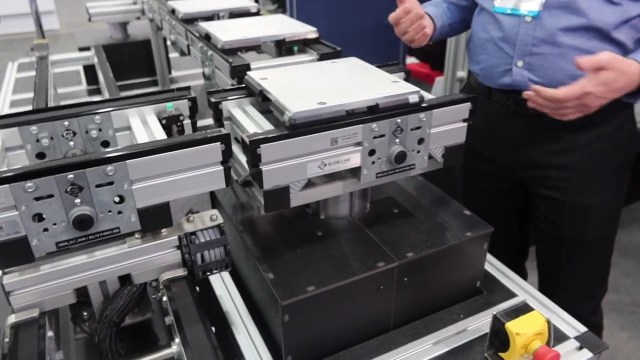
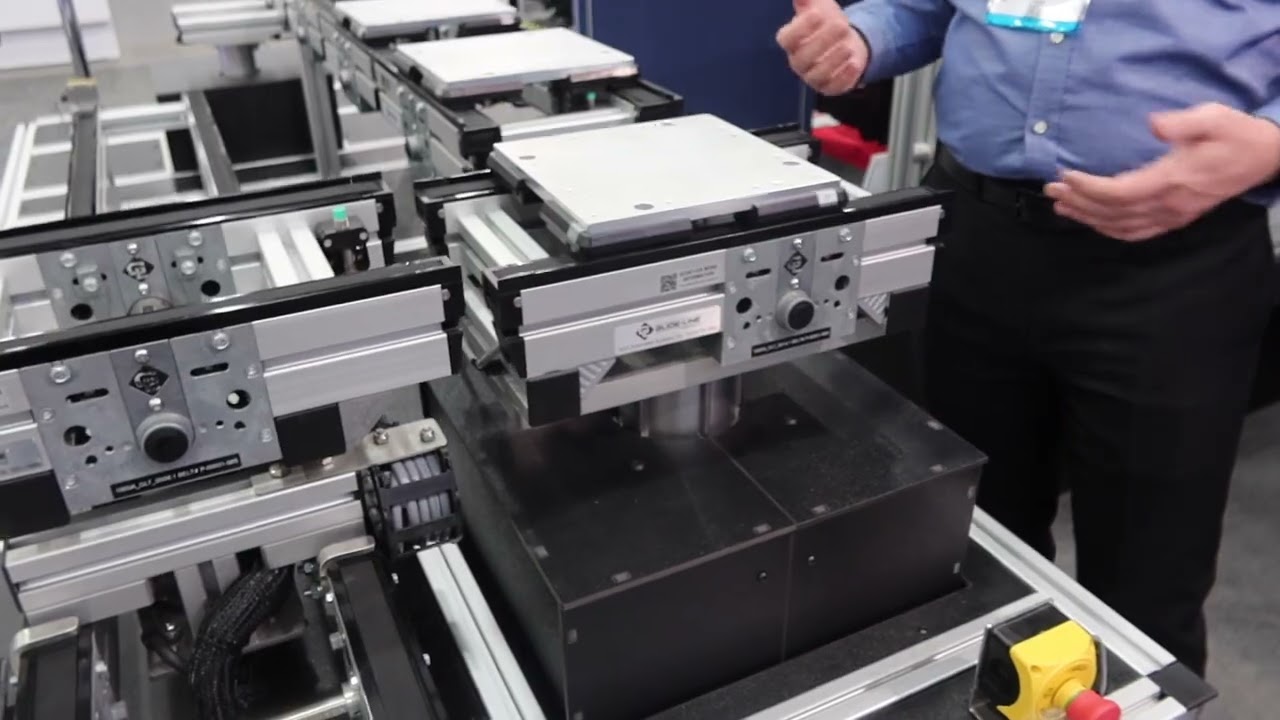
When a robot or vision system interacts with a component on a conveyor, position repeatability is critical. Modern pallet conveyors utilize integrated lift-and-locate units, stop cushions, and bypass loops that lock pallets into place with high repeatability—ensuring zero mechanical slop during fastening, dispensing, or inspection routines.
2. Tailored Multi-Strand & Center-Drive Configurations
Different assembly components carry unique distribution requirements:
- Open-Center Access: Multi-strand belt configurations leave the center of the conveyor clear, allowing vertical tooling, lifters, or sensors to access the underside of the product without interference.
- Independent Strand Control: Variable-speed drives and dual-strand setups allow independent movement of pallets, optimizing buffering and queue management between assembly stations.
3. Rapid CAD-Driven Design & Short Lead Times
One of the largest bottlenecks in custom conveyor integration is the design phase. Utilizing dynamic 3D CAD configurator tools allows automation engineers to configure exact lengths, widths, motor locations, and accessory placements directly in their CAD environment. This streamlines the engineering process and significantly speeds up delivery timelines.
Future-Proofing Your Automated Assembly Line
As product life cycles shorten, the ability to reconfigure an existing assembly line quickly provides a massive competitive advantage. Modular pallet conveyors allow manufacturers to swap out modules, adjust strand widths, or insert new stop-and-locate stations without discarding the core conveying infrastructure.
By prioritizing modularity, precision positioning, and rapid design integration, systems integrators can deliver robust assembly lines that easily adapt to tomorrow’s manufacturing demands.